
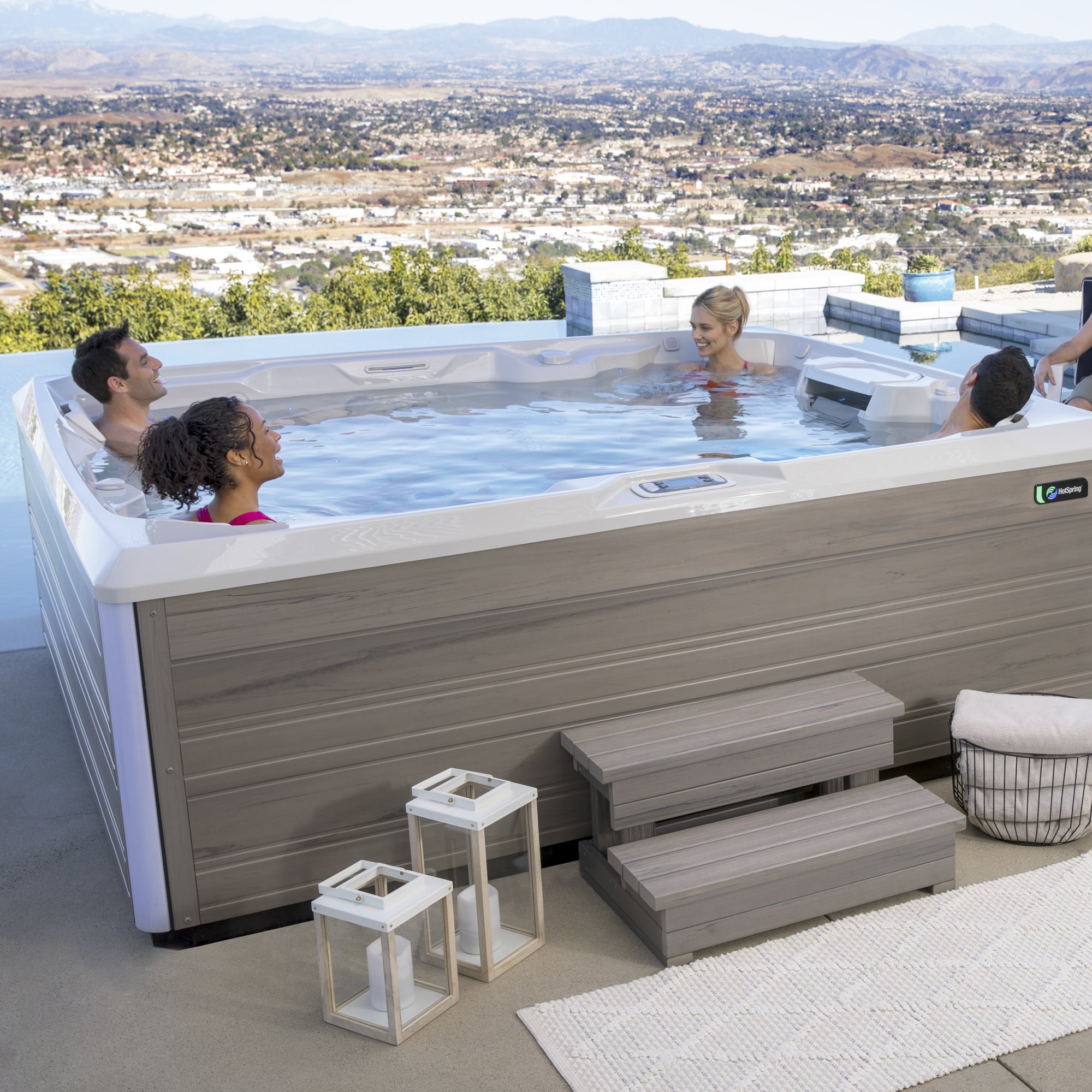
Most spas must be connected to 240V electrical service, but some offer the option of operating on either 120V or 240V. While connecting to 120V can be less involved, most customers prefer the benefits of the 240V spa, which include quicker heating time and better temperature maintenance during cold weather use. This is because the heater output is four times as great in a 240V spa versus a 120V spa. If you choose to connect your spa to 120V service, you must be certain that it is a dedicated circuit, not shared by any other appliance, and has amperage rating appropriate for the spa you select.
Today's finest spas feature a circulation pump that continuously filters the water to keep it clean and clear. It also provides the necessary flow to allow the heater to constantly maintain your set temperature. Spas without circulation pumps must rely on the low speed of a larger horsepower pump turning on periodically to provide filtration and the flow required for heating. The circulation pump is the most efficient method to provide flow for filtration and heating.
Many manufacturers talk about the horsepower of their pumps. Horsepower can be measured using a "service factor" or a "true rating" system. The first describes the initial thrust as the pump first engages, but immediately the pump output falls to a lower, continuous horsepower level. When a spa manufacturer claims they have a 6-hp pump, they are describing the "initial thrust," not the horsepower the pump delivers as it runs.
Efficient plumbing, better jets and flow control are more important than horsepower. A lower horsepower pump in a more efficient spa will produce just as much jet power as a higher horsepower pump. And remember, you are looking for a comfortable but strong massage, and not looking for acceleration up a mountain road or a punishing hot water experience!
Hydrotherapy is the combined effect of heat, massage, and buoyancy. Warm water dilates blood vessels, increasing blood flow to sore or damaged tissues, allowing oxygen and nutrients to help overworked muscles recover faster. Massage, provided by the spa's jet system, relaxes tense muscles and relieves pressure on surrounding nerves. Massage also improves circulation and accelerates the body's natural healing process. Buoyancy reduces your body's weight by 90%. This relieves pressure on strained joints and muscles. Hydrotherapy is widely recognized as an effective method of alleviating the tension commonly associated with stress.
Truly beneficial hydrotherapy is directly related to the placement of the jets and to some extent, being able to adjust each jet where it is needed. These are the standards by which physical therapy and athletic hydrotherapy systems are judged. A common point of consumer confusion occurs when manufacturers load up a spa with lots of inexpensive, non-adjustable, stationary jets. It doesn't make any difference how many jets a spa has if they are not properly located and plumbed to provide the correct balance of water, air and horsepower.
There are two kinds of horsepower ratings applied to spa pumps: "Continuous Operating" horsepower and "Brake" horsepower (also called "Marketing" horsepower). Continuous Operating is the horsepower the motor is capable of producing while the spa is in operation. Brake is the amount of horsepower the motor produces on start-up before dropping to the Continuous Operating rate.
Proper water maintenance is vital to enjoyment of your spa. Maintenance procedures are not difficult. Most manufacturers recommend draining and cleaning your spa no more than 3 or 4 times per year, depending on how frequently you use it and how well you maintain your water. In most cases this simple process will only take about an hour to accomplish.
Salt water hot tubs can be drained and cleaned 1-2x a year; Hotspring advertised water to last 12months depending on usage.
Quality spas are available in a wide range of prices. Just like cars, spa prices reflect features, materials and workmanship. No matter which brand of spa you finally choose, we want you to be an informed consumer and find the right spa for your needs.
A spa can be installed indoors or outdoors, although over 90%, including those in cold weather climates, are installed outdoors. The two main considerations for installing a spa indoors are: will it fit through the door, and is the structural strength of the flooring adequate. A typical 3-person spa weighs approximately 2,500 lbs/1,150 kg when filled.
You may consider "wet testing" a spa before purchasing. This means getting into a spa with water in it. We maintain filled demonstration models just for this purpose. Here is what you should look for: Verify that the seats provide comfortable support. You do not want to have to scoot down in the spa like you do in a bathtub. When sitting in any seat, the water should reach shoulder level. If it does not, you will not get full hydrotherapeutic value. Stay in the spa with the jets on for at least 15 minutes. At the end of that time you will know whether the seating and jet arrangements are comfortable.
FREE delivery includes:
Free delivery does NOT include:
You need to have a proper foundation and meet any electrical requirements. We'll will walk you through the process and connect you with an expert to install your hot tub.
Thanks to advanced water management and filtration systems, hot tub maintenance is easier than ever—routine tasks take just a few minutes a week. When we surveyed current owners about basic hot tub maintenance, nearly all of them said it was easy! Here’s a quick summary of how to maintain a hot tub:
Water: Check the chemical levels weekly with test strips and adjust them by adding the appropriate products per your owner’s manual—no chemistry expertise necessary. Drain and refills are only needed every 3–4 months (salt systems should only be drained and filled once per year), based on use.
Filter: Rinse and clean filters with a garden hose or filter flosser once per month. Replace as needed.
Cover: Use a cover to help keep your water warm and clean. It will protect your hot tub from debris and weather elements.
“Love our tub. It’s so easy to take care of!”
–Jenny, Winnipeg, MB, Canada
Swim spas run between $20,000 to $50,000, while in-ground pools cost an average of $40,000 to $100,000, depending on installation type, size, and other requirements. The cost to heat a swim spa typically totals between $1 and $3 per day, while an in-ground pool costs more than $5 per day depending on heater type, pool size, and climate. Maintenance costs for swim spas
Swim spas are very versatile when it comes to installation. Whether you choose to create an indoor pool retreat or a more traditional backyard pool paradise, your swim spa can be installed in-ground, freestanding, vaulted into the ground, partially recessed in-ground, or with a deck surround.
Serving as an all seasons pool™, a swim spa enables you to harness water’s natural ability to soothe and strengthen your body and mind any time of the year. Swimming is an ideal entry-level exercise option for those just beginning their health journey or recovering from an injury. It’s also a challenging choice for athletes of all levels eager to get into the best shape of their lives from the year-round privacy of their own backyard.
Some people are attracted to the numerous health and wellness features they offer and others like the convenience they provide. Regardless of whether you’re creating a staycation-worthy backyard or an all seasons pool™ option, swim spas can increase the amount of fun, relaxation and fitness level for everyone in your family.
A sauna is a small room or enclosure designed to promote relaxation and wellness through heat therapy. Saunas use either traditional heaters or infrared technology to warm the body and encourage sweating.
There are two main types of saunas: traditional Finnish saunas, which heat the air to high temperatures, and infrared saunas, which use radiant heat to warm the body directly. Some models combine both types for a customizable experience.
Traditional saunas heat the air around you, creating a hot and humid environment, while infrared saunas use light waves to directly heat your body at a lower air temperature. Both provide unique relaxation and health benefits.
Regular sauna use can help relieve stress, relax muscles, improve circulation, and promote detoxification. Many users also report better sleep and enhanced recovery after exercise.
Most traditional saunas heat up within 30–45 minutes, while infrared saunas typically reach operating temperature in about 10–15 minutes.
Yes. Modern saunas are available as modular kits or custom builds that can fit in a wide variety of spaces, including basements, bathrooms, and garages.
Most people use their sauna three to five times per week, depending on wellness goals and comfort. Each session usually lasts 15–30 minutes.
Saunas are generally safe for healthy adults. However, individuals with heart conditions, high blood pressure, or who are pregnant should consult their doctor before using a sauna.
To keep your sauna in good condition, wipe down the benches and walls with a damp cloth after each use, and allow it to dry completely. Avoid using harsh cleaners that can damage the wood.
Yes. Many saunas can be customized with different wood types, lighting, glass panels, sound systems, and smart controls to match your preferences and space.
Very easy. With its low-maintenance cabinet and tool-free removable panel, routine cleaning and servicing are simple.
The Vigor™ offers full temperature flexibility—chilling down to 40°F for cold therapy and heating up to 104°F for a soothing soak.
Yes, the Vigor™ is designed for versatile placement. Its durable steel frame and weather-resistant cabinetry make it perfect for indoor wellness rooms or outdoor recovery setups.
No plumbing required. The Vigor™ is a plug-and-play unit with a 9.5 ft cord and integrated drain spout, making setup and drainage easy.
The insulated deep-soaking design offers full-body immersion for maximum recovery benefits and comfort.
Absolutely. The Vigor™ features non-slip comfort mats to enhance safety and relaxation during use.